Three-Layer Approach
Content Optimizer
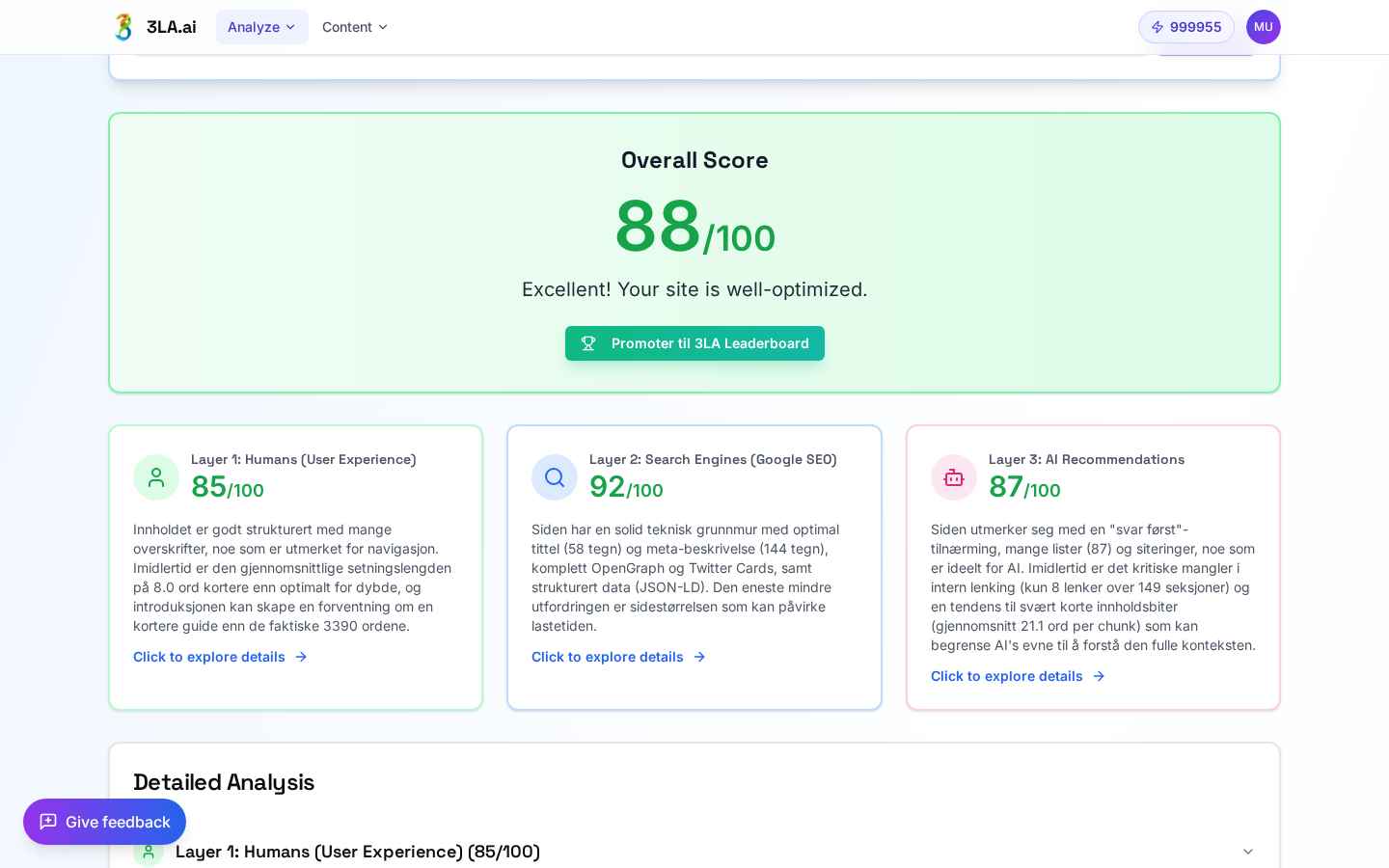
One input, three structured outputs. The optimizer restructures your text for human readability (BLUF), search engine access (semantic HTML + JSON-LD) and AI citation readiness — in a single pass.
How it works
Layer 1 — Humans
- BLUF structure (Bottom Line Up Front)
- Short paragraphs, scannable layout
- Reading time and content length checks
Layer 2 — Search Engines
- Semantic HTML headings (H1–H6)
- Meta title, description and Open Graph
- JSON-LD structured data
Layer 3 — AI Agents
- Compact summary for LLM context windows
- Key takeaways AI can extract and cite
- Answer-first format for citation readiness
Quality, not speed
The optimizer does not promise faster content creation. It restructures existing text so each layer — human, search, AI — gets the format it needs. The goal is clearer, more verifiable and more useful answers.
Consistent structure
Every output follows the same three-layer format. No variation between authors or content types.
SEO metadata included
Meta title at 50–60 characters, description with CTA, focus keywords and the right Schema.org type.
AI-ready format
Key takeaways, FAQ structure and compact summaries that AI models can extract and attribute correctly.
3LA Connector for WordPress
Publish optimized content directly to WordPress with two clicks. Content, SEO metadata and JSON-LD transfer automatically.
Ready to restructure your content?
Start with 5 free credits — no credit card required.
One draft, three editorial checks
Content Optimizer works with a source URL or a draft. Lead with the answer readers need, organise the page with semantic headings and connect factual claims to clear sources. Review the generated HTML and JSON-LD together: structured data should describe what the reader can actually find on the page.
Publish evidence, not a promise of rankings
Check names, dates, author identity and the intended permalink before publishing. A better structure can make a page easier to read and retrieve, but cannot guarantee a Google position or an AI citation. Re-audit after publication and compare search and citation data over equivalent periods.
Frequently Asked Questions
What does Content Optimizer do?
Restructures a page for three audiences in one pass: readability (BLUF), search access (HTML + JSON-LD) and AI-citability (chunks, facts, entities).
Do I paste a URL or raw text?
Both. Paste a live URL or raw text. The output is a restructured version ready for publishing.
Can I publish directly?
Yes. WordPress Connector publishes with one click from the optimizer.
How is this different from an AI rewriter?
It produces structured text: answer-first paragraphs, semantic HTML, JSON-LD, FAQ markup and claim-level references. Three layers, not just readability.
Does it work in Norwegian?
Yes. Both English and Norwegian — preserves source language with three-layer improvements.
FROM THE BLOG
Latest field notes.

AI SEO Tools Comparison in 2026: A Strategist's Honest Take
AI visibility tools answer three different questions. Is my site built so AI can read and trust it? How often does AI mention me? Is a change in those mentions real? Classic SEO suites answer the first question only partly. Daily trackers such as Peec AI and Profound answer the second, across many engines. The Three-Layer Approach (3LA) answers the first with deterministic structural scoring and the third with repeated sampling and confidence intervals. Most teams need more than one of these. The useful thing is to know which question each tool is actually answering.
A Practical Setup Guide for 3la.ai
Want your brand to be preferred and cited by ChatGPT, Perplexity and Google AI Overviews? This guide walks you through setting up 3la.ai in under an hour, so you can close visibility gaps, optimise your content and compete in AI search (GEO).

BrightonSEO 2026 Just Validated the Three-Layer Approach
BrightonSEO's 10th anniversary edition, held October 8–9, 2026 and drawing roughly 4,500 attendees, was dominated by one theme: GEO (Generative Engine Optimization), AI citations, and agentic recommendations. For anyone building on the Three-Layer Approach, this wasn't new information - it was confirmation.